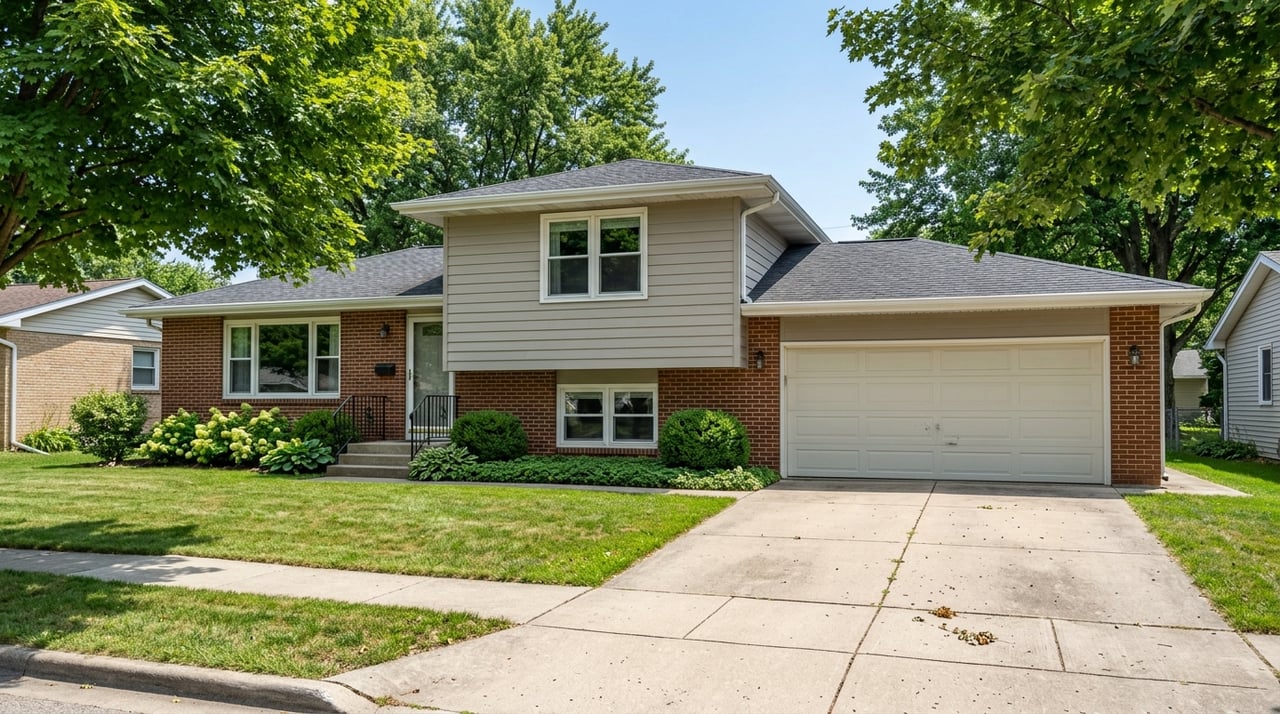
Trying to choose between east and west Hinsdale? You are not alone. Many buyers come in expecting a simple split, then realize Hinsdale works more like a collection of distinct pockets with different housing patterns, commute options, and redevelopment stories. If you want to understand what actually changes from one side of town to another, this guide will help you compare character, housing stock, walkability, and what to watch before you buy. Let’s dive in.
Start With the Right Comparison
If you are comparing east versus west Hinsdale, it helps to know that there is not one formal village map that neatly divides the market into two equal halves. A more useful buyer lens is to compare the downtown-adjacent historic core and nearby east or southeast residential areas with the farther-west and northwestern areas, where the housing stock becomes more mixed.
That distinction matters because your day-to-day experience can change a lot by block. Commute convenience, lot size, home age, and redevelopment patterns often vary more by micro-location than by a simple side-of-town label.
The local directional shorthand can also be confusing. The Hinsdale Historical Society notes that before the 1933 renumbering, the older address system ran north and south from the tracks and east and west from County Line Road, which helps explain why long-time local references do not always line up with what newer buyers expect.
East Hinsdale Feel
Historic Core and Older Homes
The east and downtown-adjacent side of Hinsdale is where many buyers find the village’s older, denser, and more historic feel. Hinsdale’s downtown historic district is a compact core roughly bounded by Maple, Lincoln, Garfield, and Second, with architecture tied to Late Victorian and late 19th- and 20th-century revival styles.
Just south and east of downtown, the Robbins survey area adds another layer of character. Village survey consultants describe it as one of Hinsdale’s more exclusive residential areas, with larger picturesque lots and some of the oldest housing in the village.
Lot Sizes and Streetscape
One reason east Hinsdale can feel so varied is that lot width changes noticeably from section to section. In the northern and western part of the Robbins area, many lots are about 40 to 50 feet wide, while blocks south of First Street between Garfield and County Line expand to roughly 60 to 130 feet.
That creates a streetscape that can shift quickly. On one block, you may see a tighter historic pattern, and on the next, homes may sit on much wider lots with a more estate-like feel.
Architectural Variety
If you enjoy older architecture, the east side tends to offer more of it in one concentrated area. Surveyed styles in the Robbins area include Queen Anne, Italianate, Colonial Revival, Prairie School, Craftsman, Tudor Revival, and Dutch Colonial Revival.
For buyers, that often means more visual character and more one-of-a-kind homes. It can also mean more variation in floor plans, updates, and maintenance history.
Highlands and Woodlands Pockets
The eastern edge also includes the Highlands and Woodlands area. The Hinsdale Historical Society describes this as a late-19th- and early-20th-century development east of County Line Road, with the Woodlands platted in 1924 using model-home planning and landscape design.
That history gives some eastern pockets a more planned, estate-subdivision feel. If you want a setting that feels established and distinctive, these areas may stand out during your search.
West Hinsdale Feel
Later Growth and More Mix
Farther west and northwest, Hinsdale typically reads as more mixed in age and product type. Village survey material points to 19th-century housing origins in Walker’s First Addition, then notes that a 1923 subdivision opened new areas for growth, with development continuing through the 1950s and beyond.
For buyers, that often translates into a wider blend of eras. You may see older homes, mid-century-era development patterns, and newer replacement homes in the same general area.
Redevelopment and Newer Replacements
Like the east side, the west side has also seen redevelopment. Survey material notes that later teardowns replaced older homes with newer, larger houses on the same or combined lots.
That means the west side is not simply “older” or “newer.” In many pockets, it is a mix of legacy homes, infill, and newer construction, which can create more range in price points, lot configurations, and home style.
Streets and Topography
Some west and northwest sections include curving streets and, in certain areas, steep western lots. That differs from some of the more traditional grid patterns found closer to downtown and on parts of the east side.
For you as a buyer, this can affect everything from curb appeal to yard usability to how a home sits on its site. It is one of those details that looks minor online but feels important in person.
Corridor and Station Identity
The west side also has a stronger corridor identity in some areas. Near West Hinsdale Avenue, the Hinsdale Historical Society documents older mixed-use buildings dating from the 1890s through the 1920s that adapted over time for retail and service uses.
That gives some western locations a different type of convenience. Instead of being centered only on the main downtown core, convenience may be tied more closely to rail access and nearby arterial corridors.
Commute and Walkability
Station Access Depends on Pocket
One of the biggest buyer mistakes is assuming one side has all the rail convenience. In reality, the BNSF corridor includes Hinsdale, West Hinsdale, and Highlands stations, so commute access depends heavily on where the property sits.
If train access is high on your list, it is smart to compare specific homes by station rather than by east-versus-west label alone. Two homes on different sides of town can offer very different commute experiences, and two homes on the same side can also feel very different.
Walkability Versus Space
For many buyers, the most practical tradeoff is walkability versus space. Homes closest to downtown and the Hinsdale station tend to benefit from the compact core, while farther-west or more outlying properties may trade some of that walkability for a different lot profile or housing mix.
Neither choice is automatically better. It comes down to whether your priority is being near the downtown core, finding a larger or different-shaped lot, or widening your options on housing style and age.
Price Drivers Matter More Than Labels
Hinsdale is a premium market, and broad side-of-town labels only tell part of the story. Realtor.com currently shows Hinsdale’s median listing price at about $1.5 million, which gives useful context for how much location details can influence value.
In practice, price is likely to move more based on lot width, station proximity, condition, and whether a home is historic, renovated, or newly rebuilt than on whether it sits east or west. That is why buyers often benefit from comparing specific blocks and property traits instead of relying on shorthand.
Historic Overlay Rules to Check
Why Historic Status Matters
If you are considering an older home, especially closer to downtown or in historically significant pockets, historic status should be part of your due diligence. Hinsdale’s Historic Overlay District is intended to preserve structures with historic, architectural, or cultural significance.
Village code also says that properties in the overlay may be eligible for alternate bulk standards and preservation incentives. That can be meaningful, but it also means you should confirm a property’s status before making assumptions about future changes.
Questions to Ask Before You Buy
Before you move forward on a historic or potentially historic home, it is worth checking a few basics:
- Is the property individually landmarked or located in the Historic Overlay District?
- Have past additions or renovations already changed the home?
- Are you hoping to remodel, expand, or rebuild in the future?
- Does the lot size or existing footprint create limits or opportunities?
These questions matter on both sides of Hinsdale, but they can be especially important in the downtown-adjacent historic core and older east-side pockets.
How to Decide Which Side Fits You
The best choice usually comes down to your priorities rather than a simple east-or-west rule. If you are drawn to historic character, a downtown-adjacent lifestyle, and architecture with more variety, the east side and nearby core areas may feel like a better fit.
If you want a broader mix of housing eras, more variation in street layout, or a location shaped by different station and corridor access points, west and northwest Hinsdale may offer more of what you want. In either case, the smartest approach is to compare specific pockets, not just general labels.
A local search strategy can save you time and help you focus on what really affects daily life and long-term value. When you look at Hinsdale through the lens of block-by-block character, station access, lot profile, and redevelopment history, the decision becomes much clearer.
If you are weighing east versus west Hinsdale and want a more tailored home search, Brandon Loncar can help you compare the right pockets, understand property tradeoffs, and buy with confidence.
FAQs
What is the most accurate way to compare east versus west Hinsdale for homebuyers?
- The clearest comparison is usually between Hinsdale’s downtown-adjacent historic core and nearby east or southeast residential areas versus the farther-west and northwestern areas, where the housing stock tends to be more mixed.
What are east Hinsdale homes like near downtown?
- East and downtown-adjacent Hinsdale generally offer older, denser, and more historic housing patterns, with a wide range of architectural styles and some pockets with larger picturesque lots.
What are west Hinsdale homes like for buyers?
- West and northwest Hinsdale often show more variation in age and product type, with later subdivision growth, redevelopment, newer replacement homes, and some areas shaped by rail and corridor access.
Is east Hinsdale more walkable than west Hinsdale?
- Homes closest to downtown and the Hinsdale station generally benefit from the compact core, while farther-west or outlying locations may trade some walkability for different lot or housing profiles.
Do Hinsdale train options vary by side of town?
- Yes. The BNSF corridor includes Hinsdale, West Hinsdale, and Highlands stations, so commute convenience depends more on the property’s specific pocket than on a simple east-versus-west label.
Should homebuyers check historic rules in Hinsdale before remodeling?
- Yes. Buyers should confirm whether a property is landmarked or located in the Historic Overlay District before assuming flexibility for remodeling, expansion, or teardown plans.